


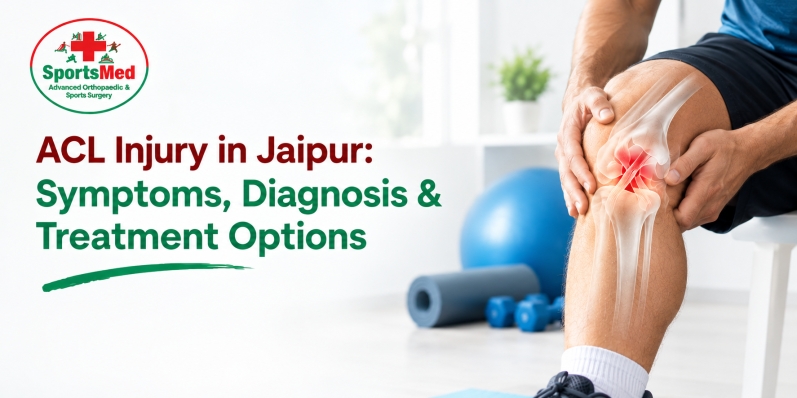
ACL Injury in Jaipur: Symptoms, Diagnosis & Treatment Options
An ACL injury can happen in seconds, but its impact on everyday movement, sports, and confidence can last much longer. A sudden twist while playing football, an awkward landing after a jump, a tackle, or even a fall can damage the anterior cruciate ligament (ACL), one of the key stabilising ligaments of the knee.
If you have experienced a knee injury followed by swelling, pain, a popping sensation, or a feeling that the knee may give way, getting an early assessment is important. Proper diagnosis helps determine whether the injury can be managed with rehabilitation or whether ACL reconstruction may be considered.
For people looking for ACL Injury in Jaipur, Sports Injury Care provides specialised sports injury and arthroscopic care under Dr. Vikram Sharma, Head of Sports Medicine and Consultant Arthroscopic Surgeon at Fortis Escorts Hospital, Jaipur. The centre focuses on personalised assessment, treatment and rehabilitation for sports and knee injuries.
What Is an ACL Injury?
The anterior cruciate ligament, commonly called the ACL, is located inside the knee and helps control forward movement and rotational stability of the joint.
An ACL injury may be a partial or complete tear. It commonly occurs during activities that involve sudden changes in direction, rapid stopping, jumping, landing, or twisting.
ACL injuries can occur in sports such as:
-
Football and basketball
-
Kabaddi and wrestling
-
Cricket and other field sports
-
Running and recreational activities
-
Activities involving sudden turns or jumps
However, an ACL tear is not limited to athletes. Slips, falls, road accidents, or an awkward landing can also cause the injury.
Common Symptoms of an ACL Injury
Recognising the symptoms early can help you seek appropriate medical attention.
1. A Popping Sensation
Some people notice a popping sound or sensation in the knee at the time of injury. This may occur during a sudden twist or awkward landing.
2. Rapid Knee Swelling
Swelling can develop within a few hours following an ACL injury. Significant swelling after a twisting injury should not be ignored.
3. Knee Pain and Difficulty Bearing Weight
Pain may make it difficult to put weight on the affected leg or walk normally.
4. Knee Instability
One of the more noticeable symptoms is a feeling that the knee is unstable or may give way, especially while turning or changing direction.
5. Restricted Knee Movement
Swelling and pain may make it difficult to fully bend or straighten the knee.
If these symptoms continue after an injury, an evaluation by an ACL Specialist in Jaipur can help identify the underlying problem.
How Is an ACL Injury Diagnosed?
An ACL diagnosis generally involves a combination of clinical examination and imaging.
Physical Examination
A specialist evaluates knee movement, stability, swelling, pain and other signs of ligament damage. Clinical tests may include:
-
Lachman test
-
Anterior drawer test
-
Pivot-shift test
These tests help the doctor assess the stability of the ACL and determine whether further imaging is required.
X-Ray
An X-ray does not directly show the ACL because it is a soft-tissue structure. However, it can help identify or rule out certain bone injuries associated with trauma.
MRI Scan
MRI is commonly used to assess ACL injuries because it can provide detailed images of soft tissues, including ligaments, tendons, cartilage and associated injuries.
An MRI may also help identify whether the ACL injury is partial or complete and whether other structures of the knee are involved.
ACL Injury Treatment Options in Jaipur
Treatment depends on several factors, including the extent of the tear, knee stability, activity level, age, occupation, associated injuries, and personal goals.
There is no single treatment approach that is appropriate for every ACL injury.
Non-Surgical Treatment
For selected partial ACL injuries or people with lower physical demands and a stable knee, non-surgical treatment may be considered.
It can include:
-
Physiotherapy
-
Muscle-strengthening exercises
-
Balance and proprioception training
-
Bracing when appropriate
-
Pain and swelling management
-
Gradual return to normal activities
A structured rehabilitation programme is important even when surgery is not required.
ACL Reconstruction Surgery
For some complete ACL tears, particularly when significant instability is present, or a person wants to return to sports involving pivoting and rapid direction changes, ACL reconstruction may be considered.
During reconstruction, the damaged ACL is replaced with a graft. Graft options can include hamstring, patellar tendon, and other suitable grafts, depending on the individual case.
At Sports Injury Care, ACL reconstruction may be performed using arthroscopic techniques. The treatment plan is selected according to the patient's knee condition and functional requirements.
Why Rehabilitation Matters After ACL Treatment
Treatment does not end with surgery. Rehabilitation plays an important role in restoring knee movement, strength, balance, and functional stability.
Depending on the individual recovery plan, rehabilitation may progress through stages such as:
-
Reducing swelling and restoring knee movement
-
Regaining muscle strength
-
Improving balance and stability
-
Building functional strength
-
Gradually returning to sports or demanding activities
Following the rehabilitation programme and progressing activities at the appropriate pace can help support recovery and reduce the risk of returning to high-demand activity too soon.
Choosing an ACL Specialist in Jaipur
Choosing a specialist involves more than looking for a title. Patients should consider the doctor's experience with ACL injuries, approach to diagnosis, surgical expertise where required, rehabilitation planning and ability to explain treatment options clearly.
Dr. Vikram Sharma is associated with Sports Injury Care and serves as Head of Sports Medicine and Consultant Arthroscopic Surgeon at Fortis Escorts Hospital, Jaipur. According to the Sports Injury Care website, he has more than 21 years of experience and has performed over 14,000 sports injury surgeries. His professional background also includes sports medicine roles associated with the Rajasthan Cricket Association and training with organisations including the International Olympic Committee, UPMC Pittsburgh and FIFA.
Patients searching for the best ACL surgeon in Jaipur should focus on an appropriate clinical evaluation and a treatment plan suited to their individual injury rather than assuming that every ACL tear requires the same procedure.
When Should You See a Doctor?
Consider getting your knee assessed if you have:
-
Significant swelling after a knee injury
-
A popping sensation during injury
-
Persistent knee pain
-
Repeated episodes of the knee giving way
-
Difficulty walking or bearing weight
-
Difficulty returning to sports after a knee injury
Early evaluation can help identify the injury and guide the next steps.
Frequently Asked Questions About ACL Injury in Jaipur
What is the most common symptom of an ACL tear?
Knee swelling, pain, a popping sensation and instability are common symptoms. Some people particularly notice the knee giving way during movement.
How is an ACL injury diagnosed?
Diagnosis usually involves a physical examination and, when appropriate, imaging such as an MRI to assess the ACL and other knee structures.
Does every ACL tear require surgery?
No. Some partial tears or stable knees may be managed with rehabilitation. Surgery may be considered when there is significant instability, associated injury or a need to return to high-demand sports.
How long does ACL recovery take?
Recovery varies from person to person and depends on the injury, treatment, rehabilitation and activity goals. Returning to sports generally requires a gradual, structured rehabilitation programme.
Can I walk with an ACL tear?
Some people can walk after an ACL injury, while others have pain, swelling or instability that makes walking difficult. An assessment is important to determine the extent of the injury.
Who should I consult for an ACL injury in Jaipur?
An orthopaedic or sports medicine specialist with experience in knee and ligament injuries can assess the condition and recommend an appropriate treatment plan.
What does an ACL Specialist in Jaipur do?
An ACL specialist evaluates knee instability and ligament damage, interprets relevant investigations and discusses suitable treatment options, including rehabilitation or reconstruction when indicated.
Take the Next Step for Your Knee
An ACL injury does not always mean the end of sports or an active lifestyle. The right approach starts with understanding the injury, getting an accurate diagnosis and following a treatment and rehabilitation plan suited to your knee.
If you are experiencing symptoms of an ACL injury, Sports Injury Care in Jaipur can help you understand your condition and available treatment options. Consult Dr. Vikram Sharma for an individual assessment and a personalised approach to ACL injury management and recovery.
ACL Injury in Jaipur: Symptoms, Diagnosis & Treatment Options
Learn about ACL injury symptoms, diagnosis, and treatment options in Jaipur, including ACL tear treatment, surgery, and rehabilitation for faster recovery.
/acl-injury-jaipur-symptoms-diagnosis-treatment
Understand the common symptoms, diagnosis methods, and treatment options for ACL injuries in Jaipur, from non-surgical care to ACL reconstruction and rehabilitation.
ACL injury in Jaipur, ACL tear treatment in Jaipur, ACL surgeon in Jaipur, ACL injury treatment Jaipur