


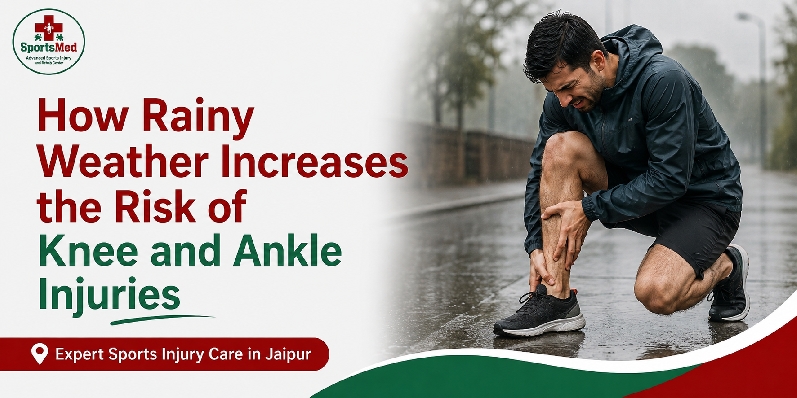
How Rainy Weather Increases the Risk of Knee and Ankle Injuries
Rain brings relief from Jaipur’s summer heat, but it also creates conditions that can make knee and ankle injuries more likely. Wet roads, slippery surfaces, reduced visibility, and sudden changes in physical activity can increase the chances of slips, twists, and falls.
For athletes and active individuals, monsoon weather can be particularly challenging. A simple misstep on a wet surface may result in an ankle sprain, while a sudden twist or awkward landing can affect the knee ligaments, meniscus, or cartilage.
At Sports Injury Care, knee, ligament, cartilage, and sports-related injuries are evaluated with a focus on accurate diagnosis, appropriate treatment, and rehabilitation.
Why Does Rainy Weather Increase Injury Risk?
Rain itself does not directly damage healthy knees or ankles. The bigger concern is how rainy conditions affect the environment and our movement.
1. Slippery Roads and Surfaces
Wet floors, roads, stairs, sports grounds, and pavements offer less traction. Your foot can suddenly slide while walking or running, causing the ankle to twist or the knee to rotate unexpectedly.
This can lead to:
-
Ankle sprains
-
Ligament strains
-
Knee twisting injuries
-
Meniscus injuries
-
Falls and fractures
2. Sudden Loss of Balance
When the foot slips, the body naturally tries to regain balance. This may place excessive force on the knee or ankle.
For athletes, sudden changes in direction on a wet playing surface can be especially risky. The knee may rotate while the foot remains planted, increasing stress on important stabilising ligaments such as the ACL.
3. Reduced Physical Activity
During the monsoon, many people exercise less because of rain. Reduced activity can lead to weaker muscles, reduced flexibility, and poorer balance.
When someone suddenly returns to running, gym workouts, football, cricket, or other sports, the body may not be adequately prepared for the increased load.
Common Knee Injuries During the Rainy Season
Rainy conditions can contribute to different types of knee injuries, particularly when slips, awkward landings, or sudden movements occur.
Common problems include:
-
ACL and PCL injuries
-
MCL and other ligament injuries
-
Meniscus tears
-
Tendon injuries
-
Cartilage damage
-
Knee sprains
-
Sports-related knee pain
The ACL is especially important because it helps stabilise the knee during walking, running, jumping, and changes in direction. Symptoms such as swelling, instability, a popping sensation, or the knee giving way should not be ignored.
If knee instability or repeated injuries are present, consulting a knee ligament surgeon in Jaipur can help determine whether the problem requires rehabilitation, bracing, or further treatment.
Why Ankle Injuries Are Common During Monsoon
Ankle sprains are among the most common injuries associated with slipping or uneven surfaces.
A sudden inward or outward movement of the ankle can stretch or tear the supporting ligaments. The ATFL, located on the outer side of the ankle, is particularly vulnerable during twisting injuries and ankle sprains.
Symptoms of an Ankle Injury
Watch for:
-
Pain around the ankle
-
Swelling
-
Bruising
-
Tenderness
-
Difficulty walking
-
Reduced ankle movement
-
A feeling that the ankle is unstable
If pain or instability continues after an injury, an ankle injury doctor in Jaipur can assess the condition and determine the appropriate treatment.
How to Prevent Knee and Ankle Injuries in Rainy Weather
A few simple precautions can significantly reduce your risk.
Choose Supportive Footwear
Wear shoes with good grip, especially when walking outdoors or exercising. Avoid worn-out soles that provide poor traction on wet surfaces.
Warm Up Before Exercise
Before running, playing sports, or going to the gym, spend a few minutes warming up. Dynamic movements can prepare the muscles and joints for activity.
Improve Strength and Balance
Strong quadriceps, hamstrings, calves, and ankle muscles help support the joints. Balance and stability exercises can also improve control during movement.
Be Careful on Wet Sports Grounds
Avoid sudden sprinting, pivoting, or jumping when the playing surface is excessively slippery. If conditions are unsafe, postponing intense activity may be the better choice.
Don't Ignore an Injury
Pain that continues after a fall or twist should not simply be blamed on the weather. Early evaluation can help identify ligament, meniscus, cartilage, or ankle injuries before they become more complicated.
When Should You See a Specialist?
Not every knee or ankle injury requires surgery. Depending on the injury, treatment may include rest, activity modification, physiotherapy, strengthening exercises, medication when appropriate, bracing, or surgery for significant structural damage. Sports Injury Care follows an injury-specific approach based on clinical assessment and, when required, imaging such as X-rays or MRI.
You should consider medical evaluation if you experience:
-
Severe or persistent pain
-
Significant swelling
-
Difficulty putting weight on the leg
-
Repeated knee or ankle instability
-
Locking or catching of the knee
-
A popping sensation followed by swelling
-
Inability to return to normal activities
For complex knee injuries requiring arthroscopic assessment or surgery, an experienced knee arthroscopy surgeon in Jaipur can evaluate whether minimally invasive treatment is appropriate. An arthroscopic knee surgeon in Jaipur may also be consulted for certain ligament, meniscus, and cartilage problems.
For persistent ankle discomfort, seeking ankle pain treatment in Jaipur can help identify whether the pain is due to a sprain, ligament injury, cartilage problem, or another underlying condition.
What to Do Immediately After a Rain-Related Injury
If you twist your knee or ankle after slipping, stop the activity and avoid putting unnecessary stress on the injured joint.
Depending on the injury, initial care may include:
-
Resting the affected joint
-
Applying a cold pack to help with swelling
-
Elevating the injured leg
-
Avoiding sports until the injury is assessed
-
Seeking medical attention if pain or swelling is significant
Avoid returning to sports simply because the pain temporarily improves. Proper recovery is important for reducing the risk of reinjury.
FAQs About Rainy Weather and Knee & Ankle Injuries
Does rain directly cause knee injuries?
No. Rain does not directly damage a healthy knee, but slippery surfaces, falls, and changes in activity can increase injury risk. Weather changes may also make existing joint symptoms more noticeable.
Why do my knees hurt more during the monsoon?
Changes in humidity, atmospheric pressure, activity levels, and existing joint problems may make knee discomfort more noticeable during rainy weather.
Are ankle sprains more common during the rainy season?
They can be. Wet and slippery surfaces increase the chance of slipping, twisting the ankle, and overstretching its supporting ligaments.
Should I see a doctor for an ankle sprain?
If you have significant swelling, difficulty walking, severe pain, or persistent instability, consult an ankle injury doctor in Jaipur for proper evaluation.
Can an ACL injury happen because of a slip?
Yes. A sudden slip can cause the knee to twist while the foot is planted, potentially placing excessive stress on the ACL.