


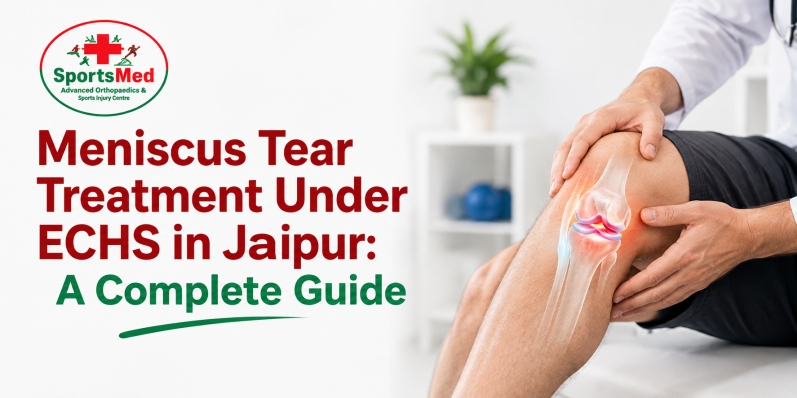
Meniscus Tear Treatment Under ECHS in Jaipur: A Complete Guide
Knee pain after a sudden twist, sports injury, fall, or awkward movement should not always be dismissed as a simple strain. A damaged meniscus can cause pain, swelling, stiffness, clicking, locking, or difficulty moving the knee normally. For ECHS beneficiaries, another important question often comes up: Can meniscus tear treatment or surgery be taken under ECHS in Jaipur?
The answer depends on the diagnosis, treatment recommended by the specialist, referral and authorisation requirements, and the applicable ECHS rules and empanelment status at the time of treatment.
This guide explains meniscus tears, available treatment options, when surgery may be considered, and what ECHS beneficiaries should understand before planning treatment in Jaipur.
What Is a Meniscus Tear?
The meniscus is a C-shaped piece of cartilage inside the knee. Each knee has two menisci, one on the inner side and one on the outer side.
They work as shock absorbers and also contribute to knee stability. A meniscus can tear because of:
-
A sudden twisting movement
-
Sports-related injuries
-
Squatting or lifting with the knee under stress
-
A fall or direct injury
-
Age-related wear and weakening of the cartilage
A meniscus tear does not look the same in every patient. The location, size, pattern, age of the patient, activity level, and associated knee injuries can all influence the treatment plan.
Common Symptoms of a Meniscus Tear
A meniscus injury may produce symptoms that gradually become more noticeable.
Common symptoms include:
-
Knee pain, especially during twisting movements
-
Swelling or stiffness
-
Clicking or popping sensations
-
Difficulty bending or straightening the knee
-
A feeling that the knee is catching or locking
-
Difficulty walking comfortably
-
A sense of instability in some cases
If these symptoms continue after an injury, a proper orthopaedic and sports medicine evaluation is important.
How Is a Meniscus Tear Diagnosed?
Diagnosis usually begins with a detailed medical history and physical examination. The doctor may assess knee movement, tenderness, stability, and specific signs associated with meniscus injury.
An MRI may be recommended when the clinical assessment suggests a meniscus tear or another internal knee injury. Sports Injury Care's meniscus treatment information also highlights MRI-based diagnosis as part of the evaluation process.
An accurate diagnosis is important because knee pain can also be caused by ligament injuries, cartilage problems, arthritis, or other conditions.
Meniscus Tear Treatment in Jaipur Rajasthan
The treatment for a meniscus tear depends on the nature and severity of the injury. Meniscus tear treatment in Jaipur Rajasthan may involve non-surgical care, rehabilitation, or arthroscopic treatment when clinically appropriate.
Non-Surgical Treatment
Not every meniscus tear requires surgery.
For selected stable or less severe tears, treatment may include:
-
Activity modification
-
Rest during the painful phase
-
Physiotherapy
-
Strengthening exercises
-
Bracing when recommended
-
Medication as prescribed by a doctor
-
Gradual return to normal activities
The objective is to control symptoms, improve knee function, and restore strength and movement.
When Is Meniscus Surgery Considered?
Surgery may be considered when symptoms persist despite appropriate conservative treatment or when the tear causes significant mechanical symptoms or functional problems.
The decision depends on factors such as:
-
Type and location of the tear
-
Tear size and pattern
-
Knee stability
-
Patient's age and activity level
-
Associated ACL or ligament injuries
-
Persistent locking or catching
-
Response to non-surgical treatment
Surgery should not be decided only on the basis of an MRI report. The scan findings need to be interpreted alongside the patient's symptoms and clinical examination.
Meniscus Repair Surgery Jaipur India
When surgery is required and the tear is suitable for repair, meniscus repair surgery Jaipur India may be considered.
Meniscus repair aims to preserve as much healthy meniscal tissue as possible. In appropriate cases, arthroscopic techniques can be used to access and treat the damaged area through small incisions.
However, not every tear can be repaired. In some situations, removing only the damaged portion of the meniscus may be considered instead.
Sports Injury Care provides arthroscopic meniscus repair and partial meniscectomy as treatment options depending on the patient's condition.
Meniscus Tear Treatment Under ECHS in Jaipur
For ECHS beneficiaries, treatment planning involves more than simply choosing a surgeon or hospital.
Before proceeding, beneficiaries should confirm:
-
Whether the relevant hospital is currently empanelled under ECHS
-
Whether the required procedure is covered under the applicable ECHS provisions
-
Whether a referral or prior authorisation is required
-
What investigations and documents need to be submitted
-
Whether any approval is required before planned surgery
-
What follow-up and physiotherapy provisions apply
ECHS procedures, approvals, packages, and empanelment arrangements can change. Therefore, beneficiaries should verify the current requirements through the appropriate ECHS channel before scheduling planned surgery.
This is particularly important for procedures such as arthroscopic meniscus repair, where the recommended treatment depends on the individual diagnosis.
Choosing a Meniscus Surgeon in Jaipur
When searching online for the best meniscus surgeon in Jaipur, it is useful to look beyond a single ranking or advertisement.
Consider factors such as:
-
Experience in arthroscopic knee surgery
-
Sports injury and meniscus treatment expertise
-
Proper diagnostic evaluation
-
Experience with both surgical and non-surgical management
-
Availability of rehabilitation guidance
-
Experience managing associated knee injuries
-
Clear explanation of treatment options
At Sports Injury Care, Dr. Vikram Sharma is listed as Head of SportsMed, Consultant Arthroscopic Surgeon and Sports Medicine Specialist. His qualifications include MS Orthopaedics, a Diploma in Sports Injury from the UK, and fellowships in Arthroscopy and Sports Medicine from the University of Pittsburgh and Shoulder Arthroscopy in the USA.
Why Rehabilitation Matters After Meniscus Treatment
Treatment does not end after the procedure.
Rehabilitation plays an important role in restoring:
-
Knee movement
-
Muscle strength
-
Balance and stability
-
Confidence while walking
-
Functional movement
-
Safe return to physical activity
The rehabilitation timeline can vary significantly depending on whether the patient receives conservative treatment, meniscus repair, or partial meniscectomy. It can also depend on whether another injury, such as an ACL tear, is present.
Following the prescribed rehabilitation plan and returning to demanding activities too quickly can increase the risk of setbacks.
Frequently Asked Questions
Can a meniscus tear heal without surgery?
Some meniscus tears can be managed without surgery through activity modification, physiotherapy, and other conservative measures. The appropriate approach depends on the tear and symptoms.
Does every meniscus tear require surgery?
No. Surgery is not automatically required for every meniscus tear. The decision depends on symptoms, tear characteristics, examination findings, and response to non-surgical care.
Is MRI required for a meniscus tear?
An MRI may be recommended when a meniscus tear is suspected or when the diagnosis needs further evaluation. The final treatment decision should consider both clinical examination and imaging.
Is meniscus repair possible for every tear?
No. Repairability depends on factors such as the tear pattern, location, tissue quality, and overall condition of the knee.
Can ECHS beneficiaries get meniscus treatment in Jaipur?
ECHS beneficiaries may be eligible for covered treatment subject to current ECHS rules, referral or authorisation requirements, and the relevant hospital's empanelment status. Current eligibility and approval requirements should be confirmed before planned treatment.
How long does recovery take after meniscus surgery?
Recovery varies according to the procedure and individual healing. Recovery after partial meniscectomy can differ from recovery after meniscus repair, which may require a more structured rehabilitation period.
Who should I consult for a meniscus tear in Jaipur?
A qualified orthopaedic or sports medicine specialist with experience in knee and arthroscopic procedures can assess the injury and explain suitable treatment options.
Conclusion
A meniscus tear can affect walking, exercise, sports participation, and everyday knee function. However, treatment is not necessarily the same for every patient. Some injuries may respond to rehabilitation and conservative care, while others may require arthroscopic treatment.
For ECHS beneficiaries, it is equally important to understand the medical treatment plan and the applicable ECHS process before proceeding with planned treatment.
Sports Injury Care in Jaipur provides evaluation and treatment for meniscus injuries, including conservative management, rehabilitation, arthroscopic meniscus repair, and partial meniscectomy when clinically appropriate. Dr. Vikram Sharma and the SportsMed team focus on diagnosis, treatment planning, and rehabilitation for sports and knee injuries.
If you are experiencing persistent knee pain, swelling, locking, or difficulty moving your knee after an injury, seek a professional evaluation rather than continuing to ignore the symptoms.