


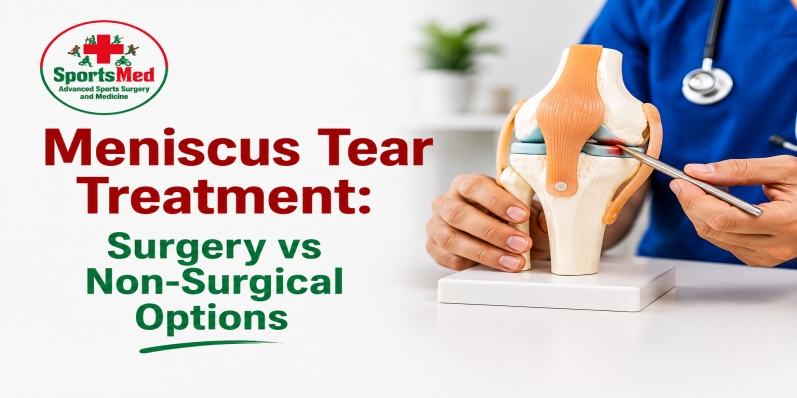
Meniscus Tear Treatment: Surgery vs Non-Surgical Options
A meniscus tear can make simple movements surprisingly difficult. You may feel pain while climbing stairs, notice swelling after activity, or experience clicking and catching when bending your knee. If you have recently been diagnosed with a tear, one question naturally comes to mind: Do I need surgery, or can it heal without an operation?
The answer depends on several factors. Not every meniscus tear requires surgery, and not every tear should simply be left alone. The right Meniscus tear treatment depends on the type and location of the tear, your symptoms, activity level, age, knee stability, and whether other structures are injured.
Understanding your options can help you have a more useful conversation with a knee specialist and choose treatment based on your individual needs.
What Is a Meniscus Tear?
The knee has two menisci—one on the inner side and one on the outer side. These tough, rubbery structures sit between the thighbone and shinbone and help absorb shock, distribute pressure, and improve knee stability.
A meniscus can tear because of a sudden twisting movement, awkward landing, sports injury, or gradual age-related changes.
Common symptoms include:
-
Knee pain or tenderness
-
Swelling and stiffness
-
Difficulty bending or straightening the knee
-
Clicking or catching
-
Pain while squatting or climbing stairs
-
A feeling that the knee is locking
-
Discomfort during twisting movements
A specialist may recommend an examination and, when appropriate, imaging such as an MRI to understand the injury.
Does Every Meniscus Tear Need Surgery?
No. This is one of the most important things to understand.
Some meniscus tears can be managed effectively without surgery, especially when symptoms are mild and there is no significant locking or persistent instability.
Other tears may require an operation because of their pattern, location, symptoms, or failure to improve with conservative treatment.
The decision should be based on the whole knee, rather than the MRI report alone.
Non-Surgical Meniscus Tear Treatment
Non-surgical meniscus tear treatment is often considered when the knee is reasonably stable and symptoms can be controlled with conservative care.
1. Activity Modification
This does not necessarily mean complete rest. Instead, you may need to temporarily reduce activities that increase pain, such as deep squats, twisting movements, jumping, or high-impact sports.
For example, someone who normally plays football several times a week may need to pause cutting and pivoting movements while working on rehabilitation.
2. Physiotherapy
Physiotherapy can be an important part of recovery. A structured programme may focus on:
-
Improving knee movement
-
Strengthening the thigh and hip muscles
-
Improving balance and coordination
-
Gradually restoring normal movement patterns
The goal is to improve how the knee functions, not simply to make the pain disappear temporarily.
3. Symptom Management
Depending on your individual situation, a healthcare professional may recommend appropriate measures to manage pain and swelling.
The exact approach should be based on your medical history and professional advice rather than self-treatment.
When Is Surgery Considered?
Surgery may be considered when symptoms continue despite appropriate conservative care or when the tear causes significant mechanical problems.
Persistent Pain or Functional Problems
If pain continues to interfere with walking, exercise, work, or everyday activities despite rehabilitation, your specialist may reassess the condition.
Locking of the Knee
Some meniscus tears can cause mechanical catching or locking. If the knee repeatedly becomes blocked or cannot move normally, further evaluation is important.
Certain Tear Patterns
Some tears have a better chance of being repaired, while others may be less suitable for repair because of their location, tissue quality, or blood supply.
The surgical decision is therefore highly individualised.
Meniscus Repair vs Meniscus Removal
When surgery is appropriate, there is more than one possible approach.
Meniscus Repair
During a repair, the surgeon attempts to preserve and stitch the torn meniscus when the tear has a reasonable potential to heal.
Preserving healthy meniscus tissue is generally an important goal because the meniscus plays a protective role in the knee.
Partial Meniscectomy
In some situations, the damaged portion may need to be trimmed while preserving as much healthy tissue as possible.
The appropriate procedure depends on the specific tear and the condition of the surrounding knee structures.
How Long Does Recovery Take?
Recovery varies considerably depending on whether the treatment is non-surgical, a meniscus repair, or another surgical procedure.
With conservative treatment, improvement may occur gradually as strength and movement return.
After surgery, rehabilitation is also essential. A recovery programme may include:
-
Restoring comfortable knee movement
-
Managing swelling
-
Building muscle strength
-
Improving balance and coordination
-
Gradually increasing daily activities
-
Returning to sports only when appropriate
A repaired meniscus may require a different rehabilitation approach from a partial meniscectomy. Your surgeon and physiotherapy team can provide guidance based on your procedure.
Meniscus Tear Treatment in Jaipur
If you are looking for Meniscus tear treatment in Jaipur, choosing an experienced knee specialist can help you understand both surgical and non-surgical options.
A Meniscus specialist in Jaipur can evaluate your symptoms, physical examination findings, imaging, activity level, and overall knee health before recommending a treatment plan.
If surgery is appropriate, people may also search for Meniscus tear surgery in Jaipur. Before deciding, it is reasonable to ask questions such as:
-
What type of meniscus tear do I have?
-
Can it be treated without surgery?
-
What are the benefits and limitations of surgery?
-
Would repair or partial removal be more appropriate?
-
What will rehabilitation involve?
-
When can I return to normal activities?
Having clear answers can make the treatment process much less confusing.
Surgery vs Non-Surgical Treatment: A Quick Comparison
|
Factor |
Non-Surgical Treatment |
Surgery |
|
Best suited for |
Selected stable or manageable tears |
Selected symptomatic or mechanical tears |
|
Main approach |
Rehabilitation and activity modification |
Repair or partial meniscectomy when indicated |
|
Recovery |
Usually gradual |
Depends on the procedure |
|
Physiotherapy |
Often important |
Usually important |
|
Decision |
Based on symptoms and knee function |
Based on tear characteristics and symptoms |
Neither option is automatically better. The best treatment is the one that matches the specific injury and the person's goals.
Frequently Asked Questions
Can a meniscus tear heal without surgery?
Some tears can be managed without surgery, particularly when symptoms are manageable and the knee does not have significant mechanical problems.
What is the best meniscus tear treatment?
There is no single best treatment. The appropriate option depends on the tear, symptoms, knee function, and individual circumstances.
Is meniscus surgery always necessary?
No. Many people can initially be treated with rehabilitation and activity modification when surgery is not clearly indicated.
When is meniscus surgery recommended?
Surgery may be considered for persistent symptoms, significant locking, certain tear patterns, or symptoms that do not improve with appropriate conservative treatment.
What is meniscus repair?
Meniscus repair involves stitching a suitable tear to preserve the meniscal tissue and allow it to heal.
How do I choose a meniscus specialist in Jaipur?
Look for a qualified knee specialist with experience in diagnosing and treating meniscus injuries and who can explain both conservative and surgical options.
Conclusion
A meniscus tear can sound alarming, but surgery is not automatically the answer. Many factors influence Meniscus tear treatment, including the tear's location and pattern, symptoms, knee stability, activity level, and response to rehabilitation.
For some people, Non-surgical meniscus tear treatment may provide effective symptom management and functional improvement. Others may benefit from surgery when persistent symptoms or mechanical problems make an operation appropriate.
If you have ongoing knee pain, swelling, catching, or locking, getting a professional evaluation is an important first step. An experienced specialist can assess your knee and help you understand whether conservative care or Meniscus tear surgery in Jaipur is more suitable for your situation.